
Apr 15, 2026
- Unit Load Devices (ULDs) have undergone significant transformation in response to the rapid growth and increasing complexity of pharmaceutical airfreight.
- Historically designed simply to consolidate cargo for efficient aircraft loading, ULDs are now evolving into highly specialised, technology-driven assets that play an active role in maintaining product integrity.
This shift has been driven by the stringent requirements of modern medicines, particularly biologics, vaccines and personalised therapies, which demand strict environmental control, traceability and regulatory compliance.
At the core of this evolution is the rise of temperature-sensitive pharmaceutical products. Medicines today are often highly sensitive to even minor deviations in temperature, with the risk that exposure outside specified ranges can degrade efficacy without visible signs. Medicines and Healthcare Products Regulatory Agency guidance emphasises the importance of maintaining strict conditions throughout the supply chain, and this has fundamentally reshaped expectations for ULD performance.
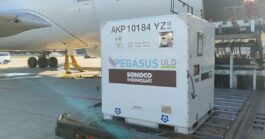
In response, ULDs have transitioned from passive containment systems to active participants in the cold chain. Early pharmaceutical ULDs were little more than insulated boxes, sometimes supplemented with dry ice. Over time, these evolved into more sophisticated designs incorporating air circulation systems and temperature control mechanisms. Today’s most advanced units are active temperature-controlled containers (TCCs), equipped with battery-powered heating and cooling systems capable of maintaining precise temperature ranges regardless of external conditions. These containers effectively function as mobile climate-controlled environments rather than simple cargo holders.
A key development has been the diversification of ULD technologies into active, passive, and hybrid systems. Active containers provide mechanical cooling and heating, often powered through rechargeable batteries or external power sources at airports. Passive containers, by contrast, rely on advanced insulation materials and refrigerants to maintain temperature for extended periods without external power. Hybrid and “advanced passive” systems combine these approaches, offering improved performance at lower cost and complexity. This diversification reflects the varying needs of pharmaceutical shipments, from short-haul distribution to long intercontinental journeys involving multiple transfers.
Another major shift has been the integration of digital technology into ULDs. Modern pharmaceutical logistics places a strong emphasis on visibility and traceability, driven by regulatory frameworks such as GDP (Good Distribution Practice). To meet these requirements, some ULDs now include onboard telemetry systems capable of monitoring temperature, location, door openings, and other environmental parameters in real time. This capability transforms ULDs into data-generating assets, enabling stakeholders to verify compliance and respond quickly to potential issues during transit.
Material innovation has also played a role in adapting ULDs to pharmaceutical needs. Traditional aluminium structures are increasingly being replaced or supplemented by composite materials, which are lighter, more durable, and often more thermally efficient. These materials not only improve performance but also contribute to sustainability goals, as some modern ULDs are designed to be largely recyclable at end of life.
Beyond the containers themselves, the broader infrastructure surrounding ULDs has evolved to support pharmaceutical logistics. Airports and cargo terminals now incorporate temperature-controlled storage facilities, such as cool rooms capable of maintaining different climate zones for multiple ULDs simultaneously. This ensures that the integrity of pharmaceutical shipments is preserved not only in flight but also during ground handling, which has historically been a weak point in the cold chain.
Despite these advances, the question of whether technological developments in ULDs are keeping pace with innovations in pharmaceutical packaging is more nuanced. Pharmaceutical packaging has itself undergone rapid transformation, incorporating features such as phase change materials, vacuum insulation panels, and smart labelling technologies for tracking and anti-counterfeiting. These innovations often extend the thermal protection of individual shipments, reducing reliance on external systems such as ULDs.
Keeping pace
In many respects, ULD technology is keeping pace, particularly at the high end of the market. Advanced TCCs and telemetry-enabled containers are well aligned with the needs of modern packaging, providing an additional layer of protection and validation. However, there is an inherent lag between packaging innovation and ULD standardisation. Packaging solutions can be developed and deployed relatively quickly by pharmaceutical companies, whereas ULDs must conform to strict aviation certification requirements and industry-wide standards, such as those set by International Air Transport Association. This regulatory burden slows the pace of innovation in ULD design compared with packaging.
Furthermore, not all pharmaceutical shipments use high-end ULDs. Cost considerations mean that many shipments still rely on passive solutions or even standard ULDs combined with specialised packaging. This creates a gap between the capabilities of cutting-edge packaging and the infrastructure used to transport it. In such cases, the burden of maintaining temperature and integrity falls more heavily on the packaging itself rather than the ULD.
The responsiveness of ULD designers to changes in pharmaceutical packaging can therefore be characterised as reactive but increasingly proactive in certain segments. Historically, ULD innovation has followed shifts in cargo demand. The emergence of temperature-sensitive pharmaceuticals as a major air freight segment prompted the development of TCCs over several decades. More recently, the rapid distribution of vaccines during global health emergencies accelerated innovation, highlighting the need for scalable, reliable temperature-controlled solutions.
Today, there are signs of greater collaboration between ULD manufacturers, pharmaceutical companies, and logistics providers. For example, the development of ULD-integrated solutions such as advanced passive containers designed specifically for pharmaceutical use indicates a more proactive approach. These designs aim to align closely with packaging requirements, reducing the need for additional handling equipment and simplifying operations across the supply chain.
Nevertheless, challenges remain. Pharmaceutical packaging is becoming increasingly diverse, reflecting the growth of personalised medicine, cell and gene therapies, and biologics with highly specific storage requirements. These products may require ultra-low temperatures, strict humidity control, or protection from light and vibration. Designing ULDs that can accommodate this diversity while remaining cost-effective and operationally practical is a complex task.
Another constraint is the operational environment in which ULDs are used. Even the most advanced container cannot fully compensate for poor handling practices or inadequate infrastructure. Industry observers have noted that while ULD technology has advanced significantly, the environments in which these containers operate can still be “marginal” in terms of meeting pharmaceutical requirements. This highlights the importance of training, standard operating procedures, and end-to-end supply chain management alongside technological innovation.
In conclusion, ULDs are undergoing a substantial transformation to accommodate the demands of modern pharmaceutical shipments. Advances in temperature control, digital monitoring, materials, and design have enabled ULDs to play a critical role in maintaining the integrity of sensitive medicines. While technological developments in ULDs are broadly keeping pace with innovations in pharmaceutical packaging, there is an inherent lag due to regulatory and operational constraints. ULD designers have historically been reactive to changes in packaging and cargo requirements, but are becoming more proactive through closer collaboration with the pharmaceutical industry. The future of ULD development is likely to involve even greater integration with packaging technologies and supply chain systems, as the industry seeks to meet the increasingly complex demands of modern healthcare logistics.
The post Reshaped expectations for ULD performance in pharma appeared first on Air Cargo Week.
Go to Source
Author: Anastasiya Simsek
Latest Posts