

Jun 02, 2026

- Latin America’s airfreight growth is being driven by rising demand for fresh produce and e-commerce, with the region’s agricultural diversity positioning it strongly for global perishables trade, provided logistics systems can keep pace.
- Regional hubs such as Mexico and Brazil are central to trade flows, but their effectiveness depends on continued investment in infrastructure, cold chain capacity, and process efficiency, alongside tighter coordination across airports, handlers, and regulators.
- Competitive advantage is increasingly defined by ecosystem integration and technology adoption, with real-time tracking, data analytics, and sustainability initiatives (including SAF development and circular logistics practices) becoming essential to maintaining reliability, transparency, and long-term scalability.
Rising consumer demand for fresh, healthy products and the expansion of e-commerce are driving new flows of cargo across Latin America, while logistical bottlenecks and infrastructure limitations continue to test the industry’s agility.
The continent’s diverse agricultural output, combined with an expanding base of high-value and perishable goods, positions it well to meet growing international demand. Yet, sustaining this growth requires more than just aircraft capacity; airports, warehouses, logistics providers, and authorities must coordinate to ensure smooth, reliable supply chains.
“We are seeing a global appetite for healthier, fresher products, which directly benefits Latin America given its diversity in fruits, vegetables, seafood, and other proteins,” Claudio Torres Faini, Commercial SVP for South America at LATAM Cargo Group, notes, pointing to how flowers remain a staple export, particularly to the US, while demand for premium perishables continues to grow across multiple markets.
e-commerce is playing a complementary role. “On the e-commerce side, demand for faster, more flexible supply chains is supporting growth, as air cargo offers agility that complements maritime alternatives,” Faini explains.
This shift towards speed and reliability is reshaping the regional airfreight landscape. Unlike maritime transport, which can face congestion or delays, air cargo ensures that high-value and time-sensitive products reach global consumers efficiently. However, this growth comes with operational challenges. Handling perishable goods requires specialised cold chain facilities and efficient turnaround times, while e-commerce shipments demand real-time tracking and adaptable logistics. Latin America’s capacity to meet these expectations will largely determine how competitive the region remains in the global market.
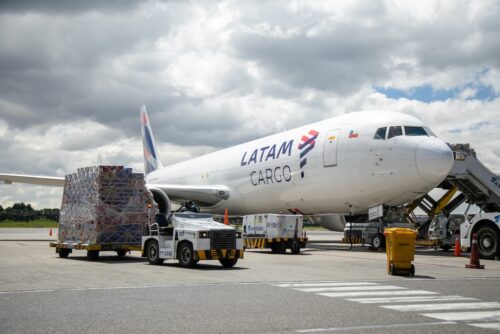 Engines of connectivity
Mexico and Brazil play a critical role as regional airfreight hubs, serving both as export gateways and import centres for high-value goods. “Regional hubs like Mexico and Brazil are essential to sustaining trade flows,” Faini states. He highlights the importance of inbound capacity: “Their large populations generate significant import demand for high-value goods, creating inbound capacity that supports South America’s export industries. Without this balance, the region’s ability to connect producers with global markets would be limited.”
Yet, maintaining competitiveness in these hubs is not straightforward. Infrastructure, regulatory efficiency, and process optimisation remain pressing challenges. “To remain competitive, these hubs must continue improving infrastructure and processes so they can handle rising volumes efficiently,” he adds.
This involves not only physical expansion, larger warehouses, additional runways, but also digital transformation and better coordination across the ecosystem. The development of these hubs has broader implications for the region. Efficient airports and integrated logistics networks enable faster, more reliable trade flows, directly influencing the economic health of export-oriented industries and enhancing the attractiveness of South America as a global supplier.
Infrastructure, technology and collaboration
Infrastructure bottlenecks remain a persistent challenge. Faini underscores the dual necessity of expanding capacity and improving efficiency: “Airports face the dual challenge of expanding physical capacity and improving efficiency. Larger and more modern warehouses, additional runways, and optimised slot management are all critical to enable smoother flows.” Cold chain facilities are particularly crucial for perishables, requiring energy-efficient technologies to minimise cargo dwell time and preserve product quality.
LATAM Cargo has invested strategically across its network, with upgraded cold storage facilities in Miami, expanded operations in Colombia, and advanced tracking systems. “These initiatives, together with rigorous handling standards, reflect our commitment to delivering cargo efficiently, securely, and in optimal condition,” Faini explains.
Technology adoption is a growing focus. Real-time tracking, advanced scanning for sensitive goods, and integrated data analytics are vital to maximise efficiency and transparency. “Strengthening data collection, analytics, and process integration will be key to maximising productivity, transparency, and the overall customer experience,” Faini notes.
Equally important is collaboration. “Growth in demand is not only about adding aircraft capacity, it requires airports, warehouses, ground handlers, and authorities to advance together. Collaboration across the ecosystem is fundamental,” he stresses. By co-developing solutions with customers and modernising infrastructure, the region can better serve diverse sectors, from perishables to industrial goods and high-value products.
Sustainability in Latin America
Environmental considerations are increasingly shaping strategy. Faini highlights the potential of a unified decarbonisation approach: “A coordinated approach would optimise economies of scale and strengthen the commercial viability of sustainable aviation fuels. Brazil has a competitive advantage in SAF, and Chile in synthetic fuels. Public-private collaboration is crucial to attract investment and create a stable regulatory environment while safeguarding regional connectivity.”
Airlines are also taking operational steps. “At LATAM Cargo, this includes promoting SAF with our customers, co-investing in ecosystem conservation, and driving operational efficiencies,” Faini says. Sustainability initiatives extend to circular economy solutions, such as replacing single-use plastics, introducing recycled plastic pallets, and using reusable cargo covers across Chile, Brazil, and Peru. These innovations not only reduce environmental impact but enhance operational resilience, earning recognition from IATA with a regional sustainability award.
Sustainability, technological advancement, and infrastructure modernisation together define the pathway for Latin America’s airfreight sector. As Faini concludes, “Only through a joint effort will the region be able to capture its full potential,” highlighting that collaboration, investment, and strategic foresight are central to the next phase of growth.
The post Poised for strategic growth amid global shifts appeared first on Air Cargo Week.
Go to Source
Author: Edward Hardy
Latest Posts