

Sep 13, 2026
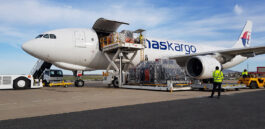
- ASEAN is strengthening its role in global air cargo, with MASkargo positioning Kuala Lumpur as a regional consolidation and redistribution hub. The strategy combines freighters, passenger belly capacity and airline partnerships to connect Southeast Asian markets with Europe, North America and other long-haul destinations without relying solely on fleet expansion.
- Manufacturing diversification is reshaping cargo demand towards higher-yield sectors, including semiconductors, AI components, electronics, pharmaceuticals and industrial equipment. China Plus One strategies are also driving machinery, automotive and production-related flows through Malaysia, Vietnam and Thailand, encouraging more selective network and capacity planning.
- Consistent handling and specialised infrastructure are becoming central to customer value, particularly for pharmaceuticals, perishables and other sensitive cargo. MASkargo is using Kuala Lumpur’s cold-chain and transhipment capabilities alongside harmonised partner processes, product definitions and handling standards to provide reliable service across an increasingly interconnected network.
ASEAN is becoming a more influential force in global air cargo, driven by manufacturing diversification, expanding passenger connectivity and stronger airline partnerships. Within this environment, MASkargo is shaping its network around Kuala Lumpur as a major regional consolidation and redistribution hub, combining freighter operations, passenger bellyhold capacity and partner airlines into a single gateway serving regional and long-haul trade. Rather than relying on fleet expansion, the strategy integrates aircraft capacity, airport infrastructure and strategic partnerships, allowing cargo to move efficiently between ASEAN markets and destinations across Europe, North America and beyond.
Network expansion is being sequenced through both organic and partnership-led growth. New passenger services into Chinese cities, alongside wider Asia-Pacific expansion, steadily increase available belly capacity, while regional feeder partnerships strengthen access across Southeast Asia. International cooperation extends that reach even further, enabling ASEAN exports to connect with global markets through shared networks rather than standalone operations. The result is a model designed to reinforce ASEAN’s position within international supply chains while providing customers with broader market access.
“We look at growth from two perspectives: organic and inorganic. As passenger services expand into markets such as China, India and across Asia Pacific, the additional belly capacity allows us to reach more destinations and support cargo growth. At the same time, partnerships help cement our position as one of Southeast Asia’s major capacity providers and build stronger connections between ASEAN and the world,” Jason Thomas, CEO of MASkargo, outlined. “Our partnerships create a bridge linking Southeast Asia with Europe, North America and South America. MASkargo becomes a gateway for ASEAN while providing international markets with stronger access back into the region. That connectivity works in both directions and strengthens the overall network.”
Aligning network planning with higher-value cargo flows
Regional cargo demand has evolved significantly since the pandemic, reshaping both network planning and commercial priorities. While perishables and agricultural products remain important, the fastest-growing opportunities increasingly come from technology manufacturing, pharmaceuticals and industrial production. Semiconductor exports, AI-related components and electronics are expanding across Malaysia, Singapore and
Thailand, while investment in healthcare manufacturing has strengthened pharmaceutical flows throughout Southeast Asia.
Manufacturing diversification across Southeast Asia has reinforced this trend. As companies adopt China Plus One
production strategies, countries including Malaysia, Vietnam and Thailand are attracting greater volumes of machinery, automotive components and industrial equipment. For airlines, this changes the yield equation. Higher-value cargo increasingly competes
for capacity, requiring more selective network planning and stronger alignment between available aircraft, market demand
and specialised handling capability rather than simply pursuing higher volumes.
“Covid-19 changed everything for Southeast Asia as an air cargo market. Before the pandemic, perishables and agricultural products dominated, but afterwards we saw strong growth in semiconductors, AI components, electronics and pharmaceuticals. Today, those higher-yield sectors are leading the market,”
Thomas highlighted.
“Manufacturing has also shifted as companies expanded production beyond China. Southeast Asia has benefited through stronger demand for machinery, equipment and automotive parts, particularly in Malaysia, Vietnam and Thailand. Those changes have fundamentally altered the region’s cargo mix,” he continued.
Delivering customer value through integrated products and consistent service
As cargo becomes more specialised, customer value increasingly depends on operational consistency rather than network reach alone. Temperature-controlled pharmaceuticals, perishables and other sensitive shipments require uninterrupted handling from origin to destination, making airport facilities as important as aircraft capacity. Kuala Lumpur’s cargo terminal therefore forms a central element of MASkargo’s commercial proposition, supporting transhipment while protecting shipment integrity throughout the logistics chain.
The same principle extends across partnerships and product development. Yield management is no longer determined solely by commodity type but by the ability to deliver consistent service across multiple carriers. Standardised booking processes, common handling procedures and aligned product definitions give customers greater confidence that shipments will receive identical treatment throughout the journey. Clearer products and harmonised service standards reduce complexity while strengthening reliability across an increasingly interconnected network.
“Our freighters, passenger aircraft and partnerships only work because we have a hub that consolidates, connects and redistributes cargo. Facilities such as our cold chain are essential because pharmaceutical supply chains cannot be broken. If that capability fails, customers will quickly move their shipments elsewhere,” Thomas expressed.
“When customers book with any partner, they expect the same product codes, handling standards and shipment treatment throughout the journey. We all need to speak the same language so the service remains consistent from origin to destination. That operational alignment is just as important as selling the capacity,” he concluded.
The post From Bellyhold to Bridge Builder appeared first on Air Cargo Week.
Go to Source
Author: Edward Hardy
Latest Posts