
Aug 31, 2026
- Tajikistan’s overall freight sector grew strongly in 2025, led by road transport, which accounts for 95.2 percent of national cargo, while airfreight volumes declined despite broader growth across the transport sector.
- Limited dedicated air cargo infrastructure leaves the country heavily dependent on passenger belly capacity, with only one scheduled freighter service and no substantial standalone airfreight network.
- Investment remains focused on roads and major projects, while neighbouring Uzbekistan and Kazakhstan are developing dedicated cargo hubs, leaving Tajikistan at risk of falling behind in capturing regional airfreight and transit opportunities.
Tajikistan’s transport sector posted strong headline growth in 2025, but the composition of that expansion reveals a widening divergence between surface transport and air freight.
Total cargo moved across all modes reached 154.8 million tonnes, up 15.2 percent year-on-year. Road transport, which accounts for 95.2 percent of national freight, increased 15.4 percent, while rail freight rose 10.9 percent to 7.4 million tonnes. Total freight turnover climbed 16.3 percent to 16,361.8 million tonne-kilometres.
Air cargo, however, moved in the opposite direction.
According to reporting from Trend News Agency on 24 April 2026, Tajikistan’s air cargo volumes declined despite continued growth in overall freight activity. Exact tonnage and percentage changes were not publicly available, limiting precise measurement, but the direction points towards the structural constraints affecting the country’s aviation logistics capacity.
A thin air freight base
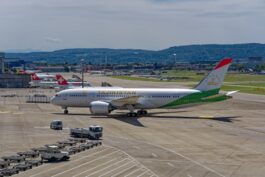
Dushanbe International Airport has only a limited dedicated cargo operation. There is one scheduled freighter service, operated by MyFreighter to Tashkent, while other carriers including Somon Air, Tajik Air, China Southern and Turkish Airlines rely on passenger aircraft with cargo carried in belly holds.
That leaves Tajikistan without a substantial standalone air freight network. Available capacity is largely dependent on passenger schedules, aircraft types and demand cycles, making the market particularly vulnerable to changes in airline operations.
Investment priorities favour roads
The imbalance is partly explained by infrastructure investment. An OECD review of the Trans-Caspian Transport Corridor published in late 2025 noted that Tajikistan’s transport spending has been heavily concentrated on roads, particularly maintenance and expansion through mountainous regions such as the Pamirs, as trade links with China and Uzbekistan deepen.
The country’s major investment commitment to the Rogun Hydropower Dam has also absorbed significant public investment capacity, limiting scope for other capital-intensive projects. Aviation infrastructure, with its substantial upfront costs and long payback periods, consequently remains a lower priority.
Neighbours are moving ahead
The contrast with neighbouring markets is becoming increasingly pronounced.
Uzbekistan has developed Navoi airport as a cargo-oriented platform, including a 16,000 sq m freight terminal and a free-trade customs regime designed to attract Europe–Asia transit flows. Kazakhstan is pursuing a longer-term cargo strategy at Karagandy, positioning the airport as a multimodal hub under a 25-year development plan.
Tajikistan, despite bordering China and occupying a potentially valuable position on transcontinental corridors, has yet to make a comparable investment in dedicated air cargo infrastructure.
A structural gap, not a cyclical dip
Without complete data on the scale of the air cargo decline, the Trend report should be treated as a directional indicator rather than a precise measure. But the wider pattern is clear: freight growth is being driven overwhelmingly by road transport, with rail making smaller gains, while air cargo appears to be shrinking from an already limited base.
That represents a structural imbalance rather than a temporary fluctuation. As neighbouring countries build dedicated cargo capacity and compete for transit trade, Tajikistan risks becoming increasingly concentrated in surface transport.
The result is a widening gap between the country’s geographic potential and its actual logistics capability, one that is unlikely to close unless air freight infrastructure becomes a deliberate policy priority.
The post Tajikistan’s air cargo gap widens as freight surges appeared first on Air Cargo Week.
Go to Source
Author: Edward Hardy
Latest Posts