

Mar 20, 2026
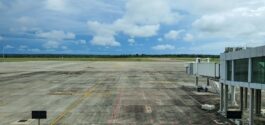
- Sri Lanka has suggested Mattala Rajapaksa International Airport as a contingency hub for long-haul flights due to ongoing Middle East airspace closures, which have disrupted major Gulf airports including Dubai International Airport, Hamad International Airport, and Zayed International Airport.
- Opened in 2013, Mattala features a 3,500-metre runway capable of handling widebody aircraft like Airbus A350s, Boeing 777s, and A380s. Despite historically low traffic due to its remote location in Hambantota, the airport has experience with diversions, charter flights, and medical evacuations, and is recognised in Sri Lanka’s contingency planning frameworks.
- Gulf carrier operations at Mattala could help offset a 20–25 percent drop in tourist arrivals and an estimated US$40 million revenue loss caused by flight cancellations. Experts note that sustaining this role requires investment in runway maintenance, fuel supply, ground handling, air traffic coordination, and careful management of overflight permissions across multiple Middle Eastern states.
Sri Lanka has proposed Mattala Rajapaksa International Airport as an alternative hub for long-haul flights following disruptions to Middle Eastern airspace caused by ongoing conflict in the Middle East.
The current crisis has led to the full or partial closure of civilian airspace over Iran, Iraq, Israel, Qatar, and parts of the United Arab Emirates. Major Gulf hubs, including Dubai International Airport, Hamad International Airport, and Zayed International Airport, have been forced to suspend or reduce operations, affecting Europe–Asia and Europe–Australia flight corridors.
With these primary hubs constrained, airlines have been forced to reroute flights, add technical stops, or in some cases cancel services entirely. Industry analysts say this has created a pressing need for reliable secondary airports outside the affected airspace. Mattala, situated on Sri Lanka’s southern coast, offers a strategic location along East–West Indian Ocean flight paths and remains clear of conflict zones, making it a viable option for transit operations.
Opened in 2013, Mattala Rajapaksa International Airport was designed as Sri Lanka’s second international airport, intended to relieve congestion at Colombo’s Bandaranaike International Airport and to position the country as a regional aviation and logistics hub. The airport was constructed with a 3,500-metre runway capable of handling large widebody aircraft, modern passenger facilities, and cargo-handling infrastructure.
However, from the start, the airport struggled to attract regular traffic. Its location in Hambantota, in the far south of Sri Lanka, is more than 200 km from the capital and the country’s main population centre, making access inconvenient for most travellers. Unlike Colombo, Hambantota lacks the economic and tourist density to generate a steady flow of passengers, leaving airlines reluctant to base operations there.
The airport’s 3,500-metre runway can accommodate large widebody aircraft, including Airbus A350s, Boeing 777s, and A380s, which are central to the fleets of Gulf carriers. This capability, combined with prior experience handling diverted flights, charter operations, and medical evacuations, has enhanced its suitability as a contingency airport. Sri Lanka’s Civil Aviation Authority has also identified Mattala in formal contingency planning frameworks, with focus on passenger facilitation, fuel availability, and operational readiness.
Economically, the Middle East crisis has already had an impact on Sri Lanka’s tourism sector. Flight cancellations have contributed to an estimated 20–25 percent drop in March arrivals, translating to an immediate revenue loss of roughly US$40 million. Officials say that if Gulf carriers formalise contingency operations at Mattala, it could support the tourism season and generate additional foreign exchange through fuel sales, handling fees, and temporary crew accommodations.
However, experts caution that sustaining such a role requires ongoing investment. Runway and taxiway maintenance, reliable fuel supply, ground-handling capacity, and coordination with regional air traffic management are all essential to ensure large aircraft can be accommodated on short notice. Security and diplomatic considerations will also be a factor, as overflight permissions across multiple Middle Eastern states remain a sensitive issue.
The post Sri Lanka’s Mattala Airport proposed as a contingency hub for Gulf carriers appeared first on Air Cargo Week.
Go to Source
Author: Edward Hardy
Latest Posts