
May 29, 2026
- Escalation in the Strait of Hormuz is intensifying, with reported US strikes in Iran, drone and missile activity near Kuwait, vessel turnarounds ordered by Iran, and the US placing the Persian Gulf Strait Authority on the OFAC sanctions list, raising both security and compliance risks for shipping transits.
- Asia–Europe container rates are strengthening further, with Hapag-Lloyd introducing a US$1,000 per 40’ peak season surcharge on top of US$800–1,000 per 40’ FAK increases, driven by early peak demand and structurally tight capacity, with idle fleet levels still below 1 percent.
- Carrier networks continue to adjust under prolonged disruption conditions, with Premier Alliance removing the Algeciras call from its FE3 Asia–North Europe service, reflecting stronger direct North Europe demand and ongoing rerouting pressures linked to the Red Sea crisis, now in its 920th day.
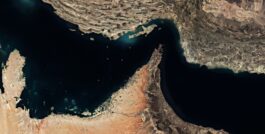
The security situation in and around the Strait of Hormuz deteriorated further this morning following reports of US strikes on sites in Iran. At the same time, authorities in Kuwait reported incoming drone and missile activity.
Iranian news agency Tasnim reported that Iran had forced four vessels to turn around and prevented them from transiting the Strait of Hormuz. The development adds another layer of disruption risk to one of the world’s most sensitive maritime chokepoints, where even short-lived interruptions can quickly ripple through tanker routing, port scheduling and insurance pricing.
In Washington, the US has now added the Persian Gulf Strait Authority (PGSA) to the OFAC sanctions list. The agency is responsible for managing transits through the Strait of Hormuz. The designation effectively places shipping lines in a position where direct compliance risk intersects with operational exposure, as carriers must now weigh potential sanctions breaches against physical security concerns when planning transits.
Industry participants have long treated Hormuz as a high-alert corridor, but the combination of sanctions designation and reported vessel turnarounds introduces a more immediate compliance dilemma. Carriers and charterers operating in the region now face reduced clarity on permissible routing structures and exposure thresholds, particularly where Iranian-linked coordination of transits is involved.
Rate pressure builds on Asia–Europe
On the container side, Hapag-Lloyd has introduced a US$1,000 per 40’ Peak Season Surcharge on Asia–Europe cargo, layered on top of recently announced freight-all-kinds increases of US$800–1,000 per 40’. The successive adjustments signal a firming pricing environment on the trade lane, with carriers responding to what is being described operationally as an earlier-than-usual peak.
Capacity additions remain limited in net terms. The idle fleet is still below 1 percent, leaving little slack in the system despite ongoing schedule reshuffling. The underlying constraint continues to be the extended routing pattern created by the Red Sea crisis, which has now reached day 920. The diversion of Asia–Europe services around the Cape of Good Hope continues to absorb vessel supply that would otherwise be available for schedule reinforcement.
Network adjustments reflect demand strength
Service changes are also emerging within alliance networks. The Premier Alliance is adjusting several Asia–North Europe loops, including modifications to the FE3 service.
The rotation previously operated via Singapore – Algeciras – Felixstowe – Hamburg and onwards, but will no longer include a call at Algeciras. The removal is being read operationally as an indication that demand into North Europe is sufficiently robust to bypass Mediterranean transhipment in favour of a more direct flow.
The adjustment also has cost and emissions accounting implications under the EU Emissions Trading System. With Algeciras removed, ETS liability is effectively concentrated on the intra-European leg between Felixstowe and Hamburg rather than the longer intercontinental segment, altering the compliance cost profile for the service.
The post Security escalation around Hormuz triggers fresh uncertainty for trade flows appeared first on Air Cargo Week.
Go to Source
Author: Edward Hardy
Latest Posts