
Oct 01, 2026
- Pharma.Aero’s Pharma Logistic Masterclass brings together senior executives, academics, consultants and supply-chain specialists to exchange expertise and tackle challenges collaboratively rather than through traditional conference-style presentations.
- Topics such as AI and digital twins are incorporated into expert sessions and C-suite workshops, with participants encouraged to translate new ideas into operational and strategic applications for pharmaceutical supply chains.
- Partnerships with universities and regional logistics communities expose participants to different approaches, markets and priorities. The programme is deliberately refreshed each year so its content reflects recent developments rather than following a fixed curriculum.
At a time when pharmaceutical supply chains are being tested by geopolitical disruption, technological change and increasingly complex healthcare products, the logistics industry is having to rethink how knowledge is created and shared. That means bringing people together who would not necessarily encounter one another in the normal course of business.
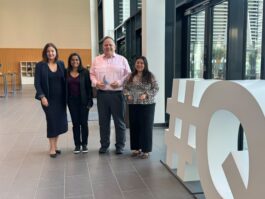
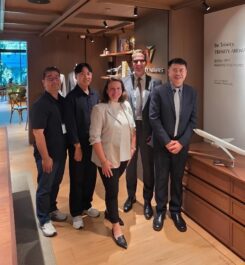
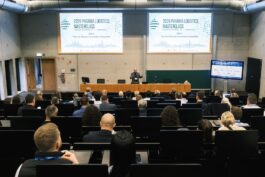
That philosophy was on display in Frankfurt, where Pharma.Aero held its sixth Pharma Logistic Masterclass as part of the organisation’s 10-year anniversary. The event brought together senior executives, academics, consultants and other specialists for a programme designed to move beyond conventional conference presentations and into practical application.
The Masterclass has become one of the ways Pharma.Aero attempts to translate the broad ambition of cross-industry collaboration into something tangible. Its wider remit is to connect Life Science and MedTech manufacturers with logistics providers and other supply-chain stakeholders, working across air, land and sea to address operational challenges and improve visibility.
“A lot of people think I know it all and my knowledge is my possession, but your knowledge is only meaningful if you share it, and that’s what the Masterclass is all about,” Pharma.Aero Secretary General FranK Van Gelder stated. “What we see here is a group of pretty executive-level, senior VPs, VPs, professors, CEO level, C level and top senior consultants that actually come together in our community. We then share the knowledge we can offer them.”
The morning sessions are built around expert presentations and discussions, while the afternoon moves into practical workshops organised around different C-suite perspectives. Participants are asked to consider what the ideas discussed earlier actually mean when they reach a boardroom or operational decision-making process.
The fundamentals of moving temperature-sensitive and highly regulated healthcare products remain familiar, but the technology and operating environment surrounding those movements are changing rapidly. Digital twins and artificial intelligence are examples of subjects that have moved from emerging concepts into the mainstream conversation. The challenge for an industry platform is therefore not simply to identify the next technology, but to work out how it should influence everyday practice.
“Technology is an important element. Digital twinning, six years ago we were not speaking about that, and AI is all over the place now. These are things that I would say are the seasoning of the Masterclass programme,” Van Gelder explained.
Where business meets academia
The programme’s academic partnerships are central to that process. Pharma.Aero works with academic institutions, recognising that neither industry nor academia has a monopoly on the knowledge required to solve increasingly complicated supply-chain problems. Industry brings operational experience and immediate exposure to commercial and regulatory pressures, while universities can provide different analytical approaches, research capabilities and access to emerging thinking.
Previous editions have taken place in locations including Kyoto and Osaka, while the next edition will move to Hong Kong. The location is selected according to a combination of factors, including the strength of the local Pharma.Aero community, an appropriate strategic airport partner, university collaboration and the relevance of the surrounding market.
The geographical element, therefore, allows the programme to expose participants to different logistics ecosystems and regional priorities, while maintaining a common focus on pharmaceutical supply chains.
“There is a lot behind that slogan, because especially from the educational side and the academic side, we realise that we don’t know it all. The exchange between different professors and different academic programmes is absolutely necessary to get the right flavour. That’s why we always combine at least two universities and two academic sites on pharma logistics,” Van Gelder outlined.
The emphasis on practical learning continues into the structure of the workshops. Limiting groups to no more than 30 participants is intended to prevent the sessions becoming passive listening exercises and instead create space for discussion, challenge and shared problem-solving.
This is a key characteristic of Pharma.Aero’s work: the organisation is designed around collaboration between stakeholders that occupy different positions in the supply chain. Its activities seek to turn those relationships into actionable projects, rather than leaving them at the level of industry dialogue.
With around half of the participants returning each year, the programme is regularly changing to reflect current developments rather than relying on a fixed curriculum.
“We learn every year, and that’s the challenge for the organising committee: what are we bringing new? There is so much happening in the world that every year we can really adapt to what we went through in the past six months to a year. Being actual, being new to the things that happen is bringing knowledge,” Van Gelder concluded
The post Pharma.Aero Masterclass: Turning shared knowledge into practical resilience appeared first on Air Cargo Week.
Go to Source
Author: Edward Hardy
Latest Posts