
Aug 17, 2026
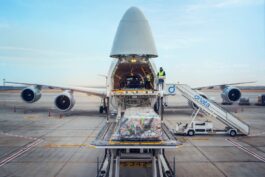
- Gulf trade disruption is occurring more frequently and compressing decision-making timelines, forcing logistics providers to recover in hours or days rather than weeks through rapid capacity rebalancing, rerouting and seamless switching between airfreight, sea-air and air-to-air networks.
- Dubai’s logistics ecosystem has shifted from tactical disruption management to a strategically designed multimodal model, where resilience is built into operations through integrated planning, coordinated stakeholder responses, predictive data models and pre-established routing alternatives.
- Dubai’s dual-node infrastructure, centred on DXB and DWC and supported by Jebel Ali Port and Dubai South, provides operational flexibility, scalable freighter capacity and rapid modal interchange, with real-time data visibility and predictive forecasting increasingly driving execution and throughput recovery.
Recent volatility across Gulf trade lanes has pushed integrated ground handling and air logistics providers into a permanently higher state of operational responsiveness. The pressure points are now most visible at the interfaces where cargo transitions between airside, landside and multimodal corridors: throughput balancing at hub peaks, rapid rerouting across disrupted lanes, and the constant recalibration of capacity across airports, ports and trucking networks.
What has changed is not the existence of disruption, but its frequency and compressive effect on decision cycles. In practical terms, recovery is now measured in hours and days rather than weeks, with system buffers increasingly defined by infrastructure proximity, stakeholder alignment and the ability to switch between airfreight and sea-air flows without losing velocity. Within Dubai, that integration has created a logistics environment where disruption is absorbed, redistributed and stabilised rather than allowed to accumulate into structural failure.
“The business is dynamic and fluid, and we learn every time a disruption occurs. What we also see is confirmation that Dubai remains a strategic hub regardless of external shocks, whether that is tariffs, the Red Sea crisis or wider geopolitical developments. At the same time, disruption is accelerating multimodality, whether air-to-air or sea-to-air, because the network adapts very quickly,” Guillaume Crozier, Chief Cargo Officer at Dnata, said.
“We have also been strengthening our data model consistently over time, because the real challenge is not just managing disruption but understanding how recovery will unfold. That means anticipating when flows will return, how they will return, and through which corridors, as geopolitics continues to influence trade routes in real time,” he added.
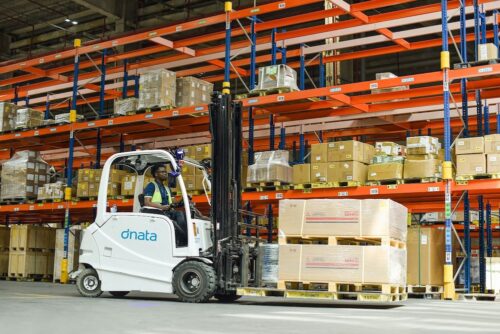 Tactical response to system design
Across Dubai, recent disruption phases have reinforced a notable shift in how throughput recovery is achieved. Rather than relying on isolated corrective actions, recovery now emerges from synchronised execution across capacity rebalancing, rerouting and tightly coordinated partner intervention. This has materially reduced recovery lag, with cargo flows stabilising faster even under constrained operating conditions.
More importantly, multimodality has evolved from a reactive adjustment tool into a structured operating feature of the ecosystem. Sea-air and air-to-air routing are no longer improvised during disruption; they are increasingly embedded into planning assumptions and commercial offerings. That shift has redefined resilience as a designed outcome, not an emergency response, with supply chains adapting upstream to available logistics pathways.
“Recovery across Dubai’s aviation ecosystem is now measured in days rather than longer cycles. That is because capacity rebalancing, rerouting and partner coordination are no longer isolated actions; they operate together as a system. The ability to switch between these levers quickly is what defines resilience today,” Crozier explained.
“We have evolved from tactical responses into a more strategic multimodal framework. These routing options are now offered upfront to the market rather than being created during periods of disruption. Over time, shippers have begun to align their production cycles with these structured logistics flows.”
Dual-node infrastructure
The resilience of Dubai is increasingly being tested through the interaction of passenger and cargo flows, particularly as prioritisation decisions become more dynamic under disruption conditions. The operational relationship between Dubai International Airport and Al Maktoum International Airport has become central to this balance, with freighter capacity progressively concentrated in scalable infrastructure while belly capacity continues to provide flexibility across long-haul networks.
This dual-node structure is reinforced by deeper ecosystem integration across Jebel Ali Port and Dubai South, where sea-air connectivity, customs coordination and trucking corridors create rapid modal interchange during disruption. Increasingly, the differentiator is not physical infrastructure alone, but the quality of data visibility and the speed at which operational intelligence translates into execution decisions at shift level.
“The dual-hub model has been a long-term strategic vision, and what we are seeing now is the impact of that coming through in cargo growth. DWC is increasingly positioned for freighter expansion, while DXB continues to provide essential belly capacity. Together, this creates flexibility for operators in terms of slot availability and network optimisation,” Crozier said.
“The resilience of the system is supported by strong infrastructure and the ability to connect ecosystems such as Jebel Ali Port and Dubai South. Predictive forecasting is becoming central, supported by near real-time visibility across operations. The key is ensuring that predictive insight translates directly into decisions on the ground,” he concluded.
The post Multimodality strategy strengthens resilience appeared first on Air Cargo Week.
Go to Source
Author: Edward Hardy
Latest Posts