
Jul 24, 2026
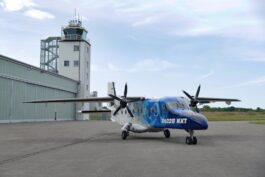
- The Do228 NXT combines a proven turboprop platform with modern avionics and a flexible cabin, enabling reliable operations from short runways, gravel strips and remote airfields where conventional aircraft are less effective.
- Its reconfigurable rectangular fuselage allows rapid adaptation between cargo, passenger, military, border patrol and maritime surveillance missions, giving operators greater versatility and multiple revenue opportunities from a single platform.
- Rather than maximising payload alone, the Do228 NXT focuses on dependable performance in challenging climates and infrastructure-limited regions, supporting resilient regional logistics through consistent, adaptable operations.
The Do228 NXT combines a proven turboprop platform with modern avionics and a flexible cabin, enabling reliable operations from short runways, gravel strips and remote airfields where conventional aircraft are less effective.
Its reconfigurable rectangular fuselage allows rapid adaptation between cargo, passenger, military, border patrol and maritime surveillance missions, giving operators greater versatility and multiple revenue opportunities from a single platform.
Reliability drives long-term value: Rather than maximising payload alone, the Do228 NXT focuses on dependable performance in challenging climates and infrastructure-limited regions, supporting resilient regional logistics through consistent, adaptable operations.
The regional cargo market is increasingly moving towards aircraft that can provide access, resilience and operational adaptability rather than simply additional payload. The Do228 NXT reflects this requirement by combining a proven turboprop platform with modern avionics and a flexible cabin architecture designed to support multiple missions, including cargo transport.
By maintaining the ability to operate from short runways, gravel strips and remote airfields, the aircraft addresses a growing challenge for regional logistics networks: reaching locations where infrastructure limitations make conventional solutions less effective. For operators, the value proposition centres on keeping supply chains connected in markets where reliability and accessibility are critical.
“For us, the most important thing is to produce the aircraft again,” Martina Hierle, Do228 NXT pilot and programme manager, stated. “We know that there is a market for civil operation and also for military operation. The important thing is bringing everything inside the cabin and the avionics to a state-of-the-art level, and that is what we are doing right now.”
Rather than developing entirely new concepts, manufacturers and operators are increasingly looking at how established airframes can deliver new value through updated systems, improved mission capability and greater operational flexibility.
“Exactly, that’s the potential, being capable of doing everything,” Hierle explained. “Landing here in Farnborough is easy because it is a long runway, but also doing the operation on short runways, on gravel and at high airfields. We have this type of aircraft already flying in Thailand, Bangladesh and in North Canada, flying in real winter.”
The value of cargo flexibility
At a market level, the Do228 NXT’s strongest differentiator is its ability to support multiple roles without being constrained to a single operational model. Cargo operators increasingly need aircraft that can respond to changing demand patterns, particularly in regional markets where passenger, freight and government requirements can overlap.
The aircraft’s rectangular fuselage supports this flexibility by allowing practical cabin reconfiguration. This creates the potential to adjust capacity around specific missions, while for wider mobility providers it enables a single platform to support different revenue streams and operational priorities.
“It’s already being used for so many different types of operation,” Hierle said. “One is of course passenger transport, where it is possible to install up to 19 passenger seats. On the other side, it is possible to do cargo transportation. There is the possibility to install a roller door, so paratroopers can jump out of the aircraft. On the other side, there is military operation, border patrol and maritime patrol. It is very good to install different types of sensors, radar systems and cameras.”
Reliability as the foundation of regional connectivity
The Do228 NXT’s continued relevance comes from its ability to operate across demanding environments, supporting logistics requirements in climates and locations where consistency is essential. Maximum payload and speed remain important, but the ability to operate regularly, reach difficult locations and adapt to changing requirements can deliver greater long-term operational value.
The implication is clear: future regional capacity will not be defined solely by aircraft size, but by the ability to deliver dependable access across increasingly complex operating environments.
“The rectangular fuselage is good to install different types of consoles in the cabin, so operators can work with the different sensors and mission equipment. They can fly five, six, seven or eight hours doing maritime patrol, for example. The most important is really that it is always working,” Hierle concluded. “You can fly everywhere, especially also in very critical climatic areas, including snow, hot conditions and high-altitude performance. The turboprop is perfect.”
The post Do228 NXT targets cargo flexibility appeared first on Air Cargo Week.
Go to Source
Author: Edward Hardy
Latest Posts