
Nov 20, 2026
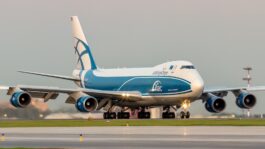
- EAS Group plans to return two former AirBridgeCargo Boeing 747-400 freighters to service in 2027, operating routes linking Russia with China, India and the UAE.
- The move reflects wider restructuring across Russia’s aviation sector, with private ownership, state-backed financing and new international partnerships helping preserve commercial capacity.
- The aircraft’s return will depend on overcoming ongoing challenges involving maintenance, spare parts, insurance and international operating permissions.
Two former AirBridgeCargo Boeing 747-400 freighters could return to commercial service in 2027, potentially restoring part of Russia’s long-haul cargo capacity after several years of disruption. EAS Group, led by former Red Wings chief executive Evgeny Solodilin, plans to deploy the aircraft on routes connecting Russia with China, India and the UAE. According to Vedomosti, the freighters were transferred from Rossiya, part of Aeroflot Group, through Russian leasing company NLK-Finance.
The development comes as Russian aviation continues to adapt to a fundamentally changed geopolitical and commercial environment. Sanctions, restrictions on Western aircraft financing and maintenance, and the reorientation of international trade have created new challenges for airlines and cargo operators. Against this background, the possible return of two Boeing 747s is more than a fleet development. It also offers an insight into how aviation assets are being reorganised and brought back into use.
Solodilin is an established figure in Russian aviation, having previously headed Zhukovsky Airport and Red Wings, the latter controlled by state-owned Rostec. His experience places him within a network of aviation executives familiar with both commercial operations and the institutional structures surrounding the industry.
His newly established company acquired control of AirBridgeCargo and other Volga-Dnepr businesses in late 2025. Earlier proposals to transfer the cargo group directly to the Russian state had not progressed. According to reporting cited by Air Cargo Week, the Transport Ministry argued that direct state participation would conflict with the group’s intended anti-sanctions development model.
The distinction is significant. In the current geopolitical environment, private ownership can offer greater commercial and operational flexibility, particularly when dealing with foreign customers, suppliers and financial institutions. At the same time, the restructuring of strategically important assets rarely takes place “independently” of the wider regulatory and economic framework.
Similar developments have been visible in other sectors of the Russian economy since 2022, although the circumstances and legal mechanisms have varied considerably.
Danone’s Russian operations were placed under temporary state management, initially led by Yakub Zakriev, a former Chechen government official and nephew of Ramzan Kadyrov. Following a sale and subsequent ownership changes, the business came under Ruslan Alisultanov, a former deputy agriculture minister of Chechnya.
Carlsberg’s Baltika was also placed under temporary state administration, with Taymuraz Bolloyev, a former head of state corporation Olympstroy, appointed president. The former Volkswagen and Hyundai plants passed to AGR Holding, whose ownership was later reorganised through a newly established company, AK Invest, following British sanctions against its previous controlling shareholder. AK Invest was founded by Anton Zhukov, an entrepreneur in automotive technology.
Other transactions followed different paths. The negotiated restructuring of Yandex included Alexander Ryazanov, a former deputy chairman of Gazprom, among its original investors. Alexei Sagal’s Arnest acquired the Russian businesses of Heineken and Unilever. The Financial Times has reported on Sagal’s connections to senior government figures, although Arnest disputed elements of that reporting. The group has since expanded its manufacturing activities into Uzbekistan.
These transactions are not directly comparable, and professional or institutional connections should not be confused with evidence of government control. Nevertheless, they reflect a broader economic adjustment in which established business relationships, regulatory experience and access to financing have become particularly important.
In aviation, the role of state-supported financial mechanisms has been especially visible.
Settlements involving Western aircraft lessors, including AerCap, SMBC Aviation Capital and BOC Aviation, required arrangements extending beyond conventional airline financing. In 2023, Russia allocated approximately 297 billion roubles from its National Wealth Fund to support settlements covering 162 aircraft. State-backed insurer NSK and leasing company NLK-Finance played central roles in these transactions.
The agreements were negotiated with the lessors, who accepted payments and transferred ownership under agreed terms. However, government-backed funding and the creation of a workable settlement mechanism were essential to making many of these agreements possible. While the specific arrangements involving the two EAS freighters may differ, their transfer through NLK-Finance places them within a familiar institutional framework.
The wider geopolitical context is equally important. Russia is seeking to preserve international transport capacity while developing trade connections with China, India and the Gulf. The proposed EAS route network reflects this changing geography of commercial aviation, in which access to aircraft, technical support, finance and international markets increasingly depends on relationships outside traditional Western aviation structures.
Nevertheless, ownership restructuring alone cannot resolve the operational challenges. Returning two Boeing 747-400 freighters to service will require maintenance, technical documentation, spare parts, insurance and the necessary permissions for international operations. These considerations will ultimately determine whether the proposed 2027 launch is commercially and technically achievable.
For the international air cargo industry, the significance of the EAS project therefore extends beyond the return of two aircraft. It illustrates how the Russian aviation sector is adapting its ownership structures, financing arrangements and international partnerships to a geopolitical environment that has changed substantially since 2022.
The experience of other industries suggests that this is part of a longer-term transformation rather than an isolated aviation transaction. Understanding the future of these aircraft requires looking not only at their registered ownership, but also at the financial, institutional and commercial relationships that will make their operation possible.
The post AirBridgeCargo’s 747s and the changing landscape of Russian aviation appeared first on Air Cargo Week.
Go to Source
Author: Edward Hardy
Latest Posts