
Oct 05, 2026
- Nebraska’s cargo proposition extends beyond its central US location, combining highway, rail and air connectivity with development-ready land, aviation infrastructure and public-sector support. Lincoln is pursuing this integrated model through industrial park planning and FastTrack, aiming to give aerospace and defence companies room to establish and expand alongside the Nebraska Air National Guard’s 155th Air Refueling Wing.
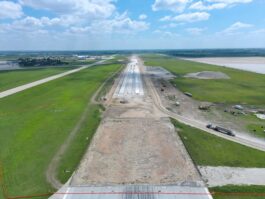
- Major infrastructure investment is being positioned as a catalyst for wider aviation growth, with roughly half of Lincoln’s runway reconstruction funded by the military and a nearly 13,000-foot runway capable of supporting demanding aircraft operations. Combined with I-80, Class I rail services from Union Pacific and BNSF, and aviation-oriented industrial sites, the infrastructure provides multiple options for moving materials, components and finished products.
- Workforce development could ultimately determine how much of that capacity is converted into growth, particularly as MRO operators face strong demand for FAA-certified Airframe and Powerplant technicians and other skilled personnel. Nebraska already has universities, community colleges, military assets and manufacturers, but closer coordination between these resources and industry requirements will be needed to attract and retain talent while giving aerospace and defence companies confidence to scale.
Nebraska’s cargo opportunity is less about geography alone than about building an aviation ecosystem that can turn infrastructure, industrial capacity and workforce into a durable competitive proposition. The area has an obvious logistics advantage: a central US position, established highway, rail and air connections and room for development.
But the assessment is pragmatic. Centrality can support cargo and aerospace activity, yet it is not sufficient on its own, particularly when Nebraska sits away from the country’s largest population centres. The value proposition has to be built around infrastructure, workforce and the ability to support long-term investment.
A location becomes strategically useful when it offers more than access: development-ready land, aviation infrastructure and public-sector partners able to respond to investment requirements. Lincoln’s industrial park master-planning work points towards that model, identifying locations where infrastructure and aeronautical access can support future development rather than simply marketing vacant land. That broader approach is also reflected in initiatives such as FastTrack, which brings local economic-development and government partners together to prepare industrial sites in advance and reduce uncertainty for companies considering an investment.
“Certainly, Nebraska’s centralised location can be an advantage for aerospace and defence companies, particularly when it comes to reaching markets across the country,” Chad A. Lay, Director of Planning and Development at Lincoln Airport Authority, stated. “But our opportunity goes well beyond geography. We need to be as competitive as possible regardless of location. Working with our state and local government officials is key. That same collaborative approach will be critical as we pursue aeronautical development, ensuring that Nebraska is not only ready to attract aerospace companies, but prepared to support their long-term growth and success here.”
“The opportunity is to market these assets together, not simply as available industrial property, but as a development environment where aviation and defence companies can locate alongside the 155th Air Refueling Wing, a Nebraska Air National Guard unit based at LNK, access nationally significant infrastructure and grow without the physical constraints found at many competing airports,” Lay continued. “We also have significant developable land within the airport’s industrial park, including opportunities for direct aeronautical access. That combination gives companies the ability to build and expand within an established aviation environment while maintaining room for future growth, something that can be increasingly difficult to find at larger, more constrained airports.”
Infrastructure that creates cargo resilience
Infrastructure is becoming a more strategic proposition as companies reassess the resilience of domestic supply chains. Lincoln’s runway reconstruction illustrates how local and federal investment can converge around infrastructure with wider national value. Roughly half of the project is being funded by the military, while the nearly 13,000-foot runway creates a platform capable of supporting operations and businesses with demanding aircraft requirements.
The opportunity is to create conditions for aviation businesses, maintenance activity, manufacturing and logistics operations to develop around it. For Nebraska, the strategic question is how effectively airports and government can turn major capital investment into private-sector activity, particularly where site preparation, utilities or environmental work might otherwise delay projects.
“In Lincoln’s case, approximately half of the runway reconstruction project is being funded by the military. The military also sees the runway as a national strategic asset,” Lay explained. “These types of partnerships between local and federal entities can help provide the unique types of infrastructure needed to then help attract aeronautical business growth to Nebraska, both defence and civilian.”
“Nebraska can position itself as a strategic location for aerospace and defence manufacturing by emphasising its central location, economic stability, available development land, reliable infrastructure and established manufacturing workforce,” he outlined. “Lincoln in particular benefits from a multimodal transportation network, with direct access to I-80 and a wider network of major highways, Class I rail service from Union Pacific and BNSF, and Lincoln Airport’s aviation infrastructure. For manufacturers, those transportation assets are complemented by the airport’s industrial area, which includes rail-served industrial development and opportunities for aviation-oriented operations. Together, these assets give aerospace and defence companies multiple options for moving materials, components and finished products efficiently, while providing room for their operations to grow.”
Workforce and coordination will determine the upside
The harder constraint may ultimately be people rather than pavement, with strong demand for technically skilled workers in maintenance, repair and overhaul, with employers seeking graduates of Part 147 schools , which are FAA-certified Aviation Maintenance Technician Schools (AMTS) that prepare students to become certified Airframe and Powerplant (A&P) mechanics, as well as experienced holders of A&P licenses. Nebraska already has universities, community colleges, military assets, airports and an established manufacturing base, but Lay argues that collaboration remains too often project-specific. A more deliberate statewide approach could connect workforce development with industry requirements, while retaining engineers and technicians in Nebraska and giving investors greater confidence that capacity can expand alongside demand.
“In addition to the capital infrastructure needed to support aviation sector growth, experienced, qualified employees are also needed. There is a great demand for people with the technical skills necessary to work in the Maintenance, Repair, and Overhaul industry. We already have important efforts underway in Lincoln, from aviation-specific training and apprenticeship opportunities through employers such as Duncan Aviation. Those programs give us a strong foundation to build on” Lay laid out. “The opportunity now is to continue expanding that work and connecting workforce development more closely with the needs of the aviation, aerospace and defence industries. Communities that can help educate, attract and retain these employees will help the aviation sector grow in that region.
“Nebraska’s next phase of aviation and aerospace growth will require continued investment in airport infrastructure and development-ready sites, supported by a state funding tool,” he concluded. “We have many of the pieces already in place, from our airports and military assets to our universities, workforce programmes and established manufacturers. The opportunity now is to bring those assets together, continue investing in them and create an environment where aerospace and defence companies can choose Nebraska, grow here and build their operations for the long term.”
The post Nebraska’s Cargo Play appeared first on Air Cargo Week.
Go to Source
Author: Edward Hardy
Latest Posts