
Sep 28, 2026
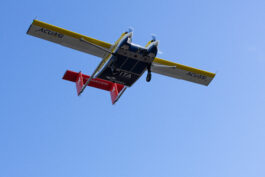
- Windracers ULTRA, a dual-use autonomous heavy-lift aircraft, completed a 1,000 km flight to establish whether anti-doping blood samples could be transported over longer distances while maintaining the integrity of the samples.
- The use of unmanned aerial vehicles it considered by those involved in the study to be crucial for remote areas such as Alaska where 82 percent of communities are not on the road network, and medical supplying is challenging.
Windracers ULTRA, a dual-use autonomous heavy-lift aircraft, completed a 1,000 km flight as part of multi-party project to assess whether anti-doping blood samples can be transported safely and reliably over extended distances while maintaining their integrity.
The flight, conducted by the unmanned aerial vehicle (UAV) experts at Alaska Center for Unmanned Aircraft Systems Integration (ACUASI) at the University of Alaska Fairbanks, took place over several hours and was the first beyond visual line of sight (BVLOS) Windracers ULTRA flight in North America.
The goal of the project, led by the International Testing Agency (ITA), a leading provider of independent anti-doping programs, and supported by Sysmex, a global provider of clinical laboratory diagnostic and haematology systems, was to assess the use of long-distance heavy-lift autonomous aircraft for transporting anti-doping test samples.
The ITA has pursued over multiple years the idea that autonomous air cargo could provide an additional option for anti-doping test delivery when conventional transport is slower, less predictable or difficult to organise, including at major events such as the Olympic Games where timely sample delivery is critical to efficient anti-doping operations and the integrity of the Games.
The flight was carried out on August 19th 2026 from Nenana Municipal Airport near Fairbanks Alaska. The UAV experts of ACUASI contributed the use of its Windracers ULTRA, a 10-meter fixed-wing autonomous aircraft made from aluminium, and provided operational and technical support for the flight, including flight planning and execution, drawing on its expertise in long-range unmanned aircraft operations. Windracers Operations personnel were on hand to support ACUASI, the ITA and Sysmex for the successful completion of the flight.
“The mission of Windracers is to push the boundaries of autonomous aviation in service completing our customers missions. This flight, expertly managed by Cathy Cahill and the ACUASI team, did exactly that and, created a new benchmark of ULTRA performance while delivering a result for our partners ITA and Sysmex. I look forward to a time when Windracers ULTRA is a standard option for sample delivery at major [sporting] events,” said Simon Muderack, CEO of Windracers.
“Looking at the efficacy of autonomous air cargo for medical test samples is incredibly important for Alaska because 82 percent of our communities are not on the road system, that means it’s very difficult to bring medical care and supplies into those communities to address issues. If we can have nurses go into the community and take samples, send them back by UAV for analysis, determine what medications are needed and then send medications back by UAV before the nurses leave, that is a huge benefit in giving people the care they need, where they live and in a timely manner,” said Cathy Cahill, Director of ACUASI at University of Alaska Fairbanks.
“Innovation is essential to addressing practical challenges in anti-doping, but it must always be underpinned by robust science and the highest standards of sample integrity and chain of custody, through this research, we are assessing whether drone technology can become a reliable additional option for transporting samples over long distances or across difficult terrain. The findings may also have applications beyond anti-doping, particularly in helping remote communities access laboratory and medical services more quickly and efficiently,” said Benjamin Cohen, ITA Director General.
“Sysmex is proud to support this research, but what excites us most is what it signals beyond sport. The same technology that can move a blood sample across 1,000 kilometres of Alaskan wilderness could one day bring timely diagnostics to patients in the world’s most remote communities,” said Andy Hay, Chairman of the Board of Directors, Sysmex America Inc.
As the next step in the study, the ITA will compare the results recorded before and after the flight to determine whether the journey had any discernible impact on white and red blood cell populations and indices relevant to the Athlete Biological Passport.
Should the study confirm that blood-sample integrity can be maintained during extended drone flights, the findings could support new transport options for anti-doping organisations and major event organisers.
The post Dual-use autonomous heavy-lift aircraft completes 1,000 km flight carrying blood samples appeared first on Air Cargo Week.
Go to Source
Author: Jaime Gair
Latest Posts