
Aug 17, 2026
- Cross-border e-commerce has become a structural driver of air cargo demand, with airports such as Liège strengthening their position through 24/7 operations and unconstrained access that enable rapid scaling of platform-driven, high-frequency shipment flows.
- The EU Cross-Border E-Commerce Forum serves as a bridge between regulators and industry stakeholders, helping align customs, compliance and operational practices as Europe’s e-commerce supply chains become more complex and subject to evolving regulatory requirements.
- The forum is increasingly positioned as a commercial execution platform rather than a traditional conference, with greater emphasis on exhibition space, targeted networking and one-to-one meetings that accelerate decision-making and business development across the air cargo sector.
Cross-border e-commerce has shifted from a volume spike to a structural pillar of air cargo demand, reshaping how secondary European gateways position themselves in global networks. The competitive question is no longer simply about infrastructure scale, but about how fluidly an airport can absorb volatile, platform-driven flows while maintaining continuous operational readiness.
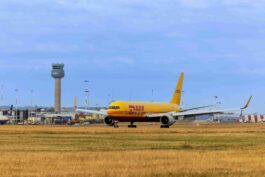
At Liège, that positioning has been deliberately engineered around unconstrained access and round-the-clock operations. The absence of slot coordination allows operators to enter and scale quickly, particularly for charter and ad hoc programmes tied to e-commerce peaks. This operational model has become increasingly relevant as digital retail platforms compress order cycles and intensify shipment frequency across Europe-bound lanes.
“For Liege, it’s fairly simple. We’ve been leading the dance since we’ve had Alibaba and Cainiao installing their premises in Liege,” Frederic Brun as vice president sales & marketing at Liege Airport, explained. “Then we’ve got Amazon, Temu and all the other actors that came shipping via Liege due to the 24/7 operations. That makes it fairly easy for anyone to establish an operation or a gateway via Liege.”
The EU cross-border e-commerce forum
The EU cross-border e-commerce forum reflects a broader industry response to the increasing fragmentation of cross-border logistics, where regulatory divergence and operational complexity sit alongside rapidly expanding parcel volumes. As e-commerce scales, the challenge has shifted from capacity availability to coordination between policy frameworks, customs execution, and platform-driven supply chains.
In that context, the forum functions as a convergence layer where regulators and industry executives can interact directly. By bringing together airlines, freight forwarders, shippers, and policy stakeholders in one setting, it reduces the latency between regulatory intent and operational interpretation. This becomes particularly relevant in Europe, where customs reform and compliance tightening are reshaping how cross-border flows are structured.
“When I joined the airport in 2022, I actually always dreamed of bringing the cargo industry into Liege,” Brun highlighted. “And we have positioned ourselves with this event as having the backbone of e-commerce. We involved the freight forwarders, the industry leaders, the shippers, putting that puzzle together to make it a success.
“We will try our best again to have all the top leaders and all the big faces and names from the industry. You will have some people from the European Union talking about the new regulations in Europe, customs authorities on how things will be implicated into the market, and C suite level executives from airlines.”
From industry gathering to commercial execution platform
As airfreight markets become more dynamic and platform-led, the value of physical forums lies in their ability to compress decision cycles and enable direct engagement between commercial actors.
This has driven a redesign of event architecture towards structured interaction formats. Exhibition space and curated one-to-one meetings are becoming more central than traditional conference programming, reflecting the industry’s preference for targeted engagement over broad-based dialogue.
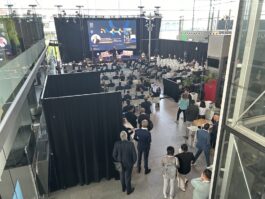
“We changed the portfolio of the entire event and increased the expo area,” Brun expressed, “So, now, we will host the event in the Palais des Congress, have a better experience, a bigger booth area and a really dedicated zone for exhibitors.”
The post The structural anchor of airfreight gateways appeared first on Air Cargo Week.
Go to Source
Author: Edward Hardy
Latest Posts