
May 18, 2026
- UK Government rejects calls to allow small pets in aircraft cabins, citing biosecurity requirements and operational constraints at British airports.
- The response, triggered by a petition exceeding 10,000 signatures, confirms that pets must continue to travel as manifest cargo to comply with rabies prevention and border control checks.
With the petition open until August 2026, the debate over in-cabin pet travel and the air cargo industry’s role in animal welfare.
The petition seeks to allow airline passengers to bring small pets on board flights arriving in the UK. The petition, which is available to view here, states: “Allow airlines, under DEFRA guidance, to offer an in-cabin travel option for small, fully documented pets on flights entering the UK, in line with international standards for other countries.”
Started by Eirini Zartaloudi and reported this weekend by the Express, the campaign, calling on the UK Government to allow small, vaccinated and microchipped pets to travel in aircraft cabins on flights into Britain, has already passed 10,000 signatures, enough to trigger an official Government response.
“Many countries, including within the EU, USA, Canada, and Ireland, generally allow small, vaccinated, and microchipped pets to travel safely in the cabin, though requirements vary between different countries and airlines. The UK requires cargo travel even for very small animals, which can be stressful for the pets and costly for their owners. I believe allowing an in-cabin option would improve welfare and align the UK more closely with widely used global practices while maintaining biosecurity,” said Eirini Zartaloudi.
That response, issued by the Department for Environment, Food and Rural Affairs, was polite but firm: no.
The reasoning goes beyond bureaucratic caution. Britain is rabies-free, and the Government intends to keep it that way. Every pet entering Great Britain must be checked for compliance with health and documentary requirements, valid rabies vaccination, tapeworm treatment, microchipping, before it can enter the country.
“The Government takes the importation of pets seriously and is committed to preserving high standards of biosecurity and animal welfare. We understand that many pet owners would like to travel with their pets in the aircraft cabin to Great Britain (GB). However, this needs to be balanced against our biosecurity requirements and the operational complexities of conducting various border controls at airports,” Government responded to this petition.
“All pets (cats, dogs and ferrets) travelling into GB must be checked for compliance with the necessary health and documentary requirements prior to entry. This includes checking that the relevant rabies vaccination and tapeworm treatment requirements have been met. Rabies is a lethal disease in unvaccinated people and animals.”
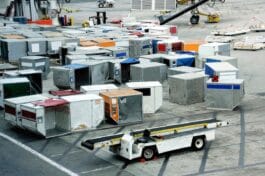
The issue discussed is also operational. Those checks happen at a dedicated pet checking facility that is physically separate from the main passenger terminal. For a dog or cat travelling in a cabin alongside its owner, routing it away from the terminal and through that facility would require a degree of airport choreography that current infrastructure simply cannot support. The result is that virtually all pets arriving into GB by air do so as manifest cargo, routed through freight handling, documented as a shipment, and transferred directly to the checking facility without passing through the main terminal. It is an arrangement that suits biosecurity.
“In practice, this means that most pets are required to travel to GB by air as ‘manifest cargo’. This enables the pets to be transferred directly to the pet checking facility and not through the main airport terminal. This approach ensures that a documentary record of the pet’s arrival is available to customs and other border control officials,” said in a Government response.
Where animals are transported in the hold, there are rigorous requirements in place to make sure that their welfare needs are met during transport. Carriers must make sure that air quality and quantity, temperature and pressure is maintained whilst the animals are onboard. The length of journey determines how much food and water must also be provided. Stringent requirements are also in place for pet transport containers under the International Air Transport Association (IATA) Live Animals Regulations (LAR), with space and ventilation concerns paramount.
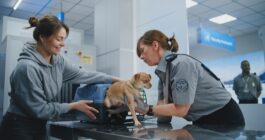
Currently, the only animals that are authorised to travel in the cabin of a commercial aircraft into GB are Recognised Assistance Dogs. The number of Recognised Assistance Dogs in the cabin will be determined by the airline and may be restricted for health and safety reasons depending on passenger information and numbers.
The Government’s response acknowledges the frustration without softening the position. The existing arrangement, DEFRA says, ensures that import checks are conducted while maintaining animal welfare standards and working within the “complex operational arrangements of an airport.” The petition remains open until 2 August 2026. It would need to reach 100,000 signatures to be considered for a parliamentary debate.
Department for Environment, Food and Rural Affairs added that “The Government is content that the existing pet travel arrangement ensures the necessary import checks have been conducted to safeguard our domestic biosecurity and maintain animal welfare standards whilst working within the complex operational arrangements of an airport.”
The post Pets in the hold: why the UK’s cabin ban is unlikely to change anytime soon appeared first on Air Cargo Week.
Go to Source
Author: Anastasiya Simsek
Latest Posts