

May 17, 2026
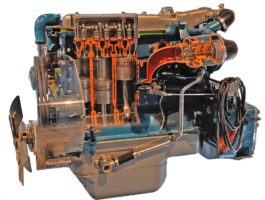
- From the late 19th century, German engineers established core internal combustion engine technologies, with Karl Benz delivering the first practical petrol automobile and Rudolf Diesel introducing highly efficient compression-ignition systems that became central to industrial and heavy-duty transport applications.
- Felix Wankel’s rotary engine in the 1960s extended this tradition of conceptual innovation, offering a radically different design with high power density and smooth operation, reinforcing Germany’s role in both incremental and structural advances in engine architecture.
- Germany’s advantage was reinforced by strong technical education and tight industry–university integration, enabling sustained leadership in precision engineering and early automotive development, even as other countries later surpassed it in mass production rather than foundational engine design.
From the late nineteenth century onwards, German inventors and engineers established many of the fundamental principles that still underpin engine technology today. The contributions of Karl Benz, Rudolf Diesel and Felix Wankel are particularly significant, not only for their technical breakthroughs but also for the way they set standards that other nations struggled to match for decades.
The origins of the modern internal combustion engine are closely tied to Germany in the 1870s and 1880s, particularly in cities such as Mannheim and Stuttgart. In 1885, Karl Benz developed what is widely regarded as the first practical automobile powered by a petrol-driven internal combustion engine in Mannheim. His Benz Patent-Motorwagen (patented in 1886) was not merely an experimental device; it was a complete, integrated system combining engine, chassis and drivetrain. The importance of Benz’s work lies in his focus on reliability, compactness, and usability – qualities that transformed the engine from a laboratory curiosity into a viable commercial product. While earlier inventors in France and Britain had experimented with gas engines, they often lacked the refinement and practical application demonstrated by Benz. At this stage, Germany was arguably several years ahead in terms of producing a coherent automotive system rather than isolated mechanical innovations.
Rudolf Diesel’s contribution, developed in the 1890s and first successfully demonstrated in 1897 in Augsburg, marked another major leap forward. The diesel engine introduced the principle of compression ignition, eliminating the need for a spark plug and significantly improving fuel efficiency. Diesel’s design achieved much higher thermal efficiency than petrol engines of the time, making it particularly valuable for industrial and heavy-duty applications, including commercial vehicles. The importance of Diesel’s work lies not only in efficiency but also in durability and scalability. By the early twentieth century, diesel engines were already being adopted internationally, yet German engineering remained at the forefront in refining and standardising the technology.
Wankel’s swinging sixties
Felix Wankel’s rotary engine, developed in the mid-twentieth century and first brought to production in 1967 by NSU in Neckarsulm, represents a different kind of innovation. Unlike conventional piston engines, the Wankel engine uses a rotating triangular rotor within an epitrochoidal housing. Its importance lies in its simplicity, smooth operation, and high power-to-weight ratio. Although it did not replace piston engines on a large scale, it demonstrated the continued capacity of German engineering to rethink fundamental mechanical principles. The Wankel engine also highlights Germany’s role not just in incremental improvement but in conceptual innovation. While Japan, particularly through Mazda, later advanced the commercial application of the rotary engine, the original breakthrough remained distinctly German.
Technical education
Beyond individual inventors, German engineering culture contributed significantly to the ICE’s development. Germany’s strong technical education system, close collaboration between universities and industry, and emphasis on precision manufacturing created an environment conducive to sustained innovation. Companies such as Daimler-Motoren-Gesellschaft and later Bosch played critical roles in refining components such as fuel injection systems, ignition timing and engine management. These advancements ensured that German engines were not only innovative but also reliable and reproducible at scale.
In comparison, other countries were not entirely absent from early engine development but were often less coordinated in their approach. France, for instance, produced notable early automotive pioneers such as Panhard et Levassor, yet their work often built upon German engine designs, particularly those of Daimler. Britain, despite its industrial strength, lagged in automotive innovation during the late nineteenth century, partly due to restrictive legislation such as the Red Flag Act (repealed in 1896), which slowed experimentation and adoption. The United States eventually overtook Europe in mass production techniques, particularly with Henry Ford’s assembly line in the early twentieth century, but this was more a triumph of manufacturing efficiency than of foundational engine design. In terms of core engine technology, the US initially relied heavily on European, especially German, engineering principles.
By the early twentieth century, the gap between Germany and other industrial nations had narrowed, but Germany maintained a leading position in high-performance and precision engineering. In diesel technology, for example, German firms remained dominant well into the interwar period, while British and American manufacturers often focused on adapting the technology for specific markets rather than pioneering it.
In conclusion, German engineering was central to the development of the internal combustion engine, not only in its early invention but in its refinement and diversification. The work of Karl Benz established the practical automobile; Rudolf Diesel revolutionised efficiency and industrial application; and Felix Wankel demonstrated the potential for radical rethinking of engine design. While other countries contributed significantly over time, Germany’s early lead – often measured in years or even decades – set the benchmark for performance, reliability and innovation that shaped the global automotive industry.
The post Germany’s pioneering engineers who defined modern internal combustion engines appeared first on Air Cargo Week.
Go to Source
Author: James Graham
Latest Posts