

Mar 16, 2026
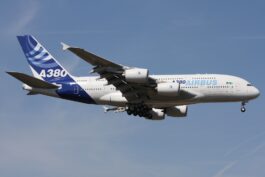
- Geopolitical disruptions, longer flight routings and constrained hub slots are reviving the argument for very large aircraft such as the Airbus A380 and Boeing 747-8, because their higher passenger and cargo capacity per movement improves slot productivity when routes lengthen and aircraft availability tightens.
- The industry shifted to efficient twinjets like the Airbus A350-1000 and Boeing 777-9, prioritising lower fuel burn and operating economics, but these aircraft offer less total lift than the four-engine giants they replaced.
- With global traffic recovering, runway expansion limited, and delivery backlogs stretching into the 2030s, the sector may have retired large-capacity aircraft too early—removing strategic lift before credible replacements or sufficient fleet supply were available.
“The A380 should come back,” said Sir Tim Clark last year.
The recent Iran war – and the sudden wave of airspace closures and detours that followed – has only sharpened that argument. Long-haul routes have stretched almost overnight as airlines reroute around conflict zone. Flights are longer, aircraft utilisation is lower and pressure on long-haul capacity has increased. In that environment, the economics of scale start to look different. Moving more passengers – and more cargo – per flight suddenly matters again.
In aviation, nostalgia is cheap. OEMs never indulge it. Aircraft disappear for a reason – usually because the numbers no longer work. Which is precisely why Clark’s remark landed with unusual weight.
If the Airbus A380 deserves a second look, then so does the Boeing 747-8. Way too many professionals with years – even decades – of experience in aviation whom I spoke to over the past year raised that point. And if both aircraft deserve a second look, perhaps the question is broader: did the industry walk away from large-scale lift before it had a credible replacement?
Around the same time as Clark’s comments, Apollo Global’s Principal Patrick Kearney explained the rationale behind the fund’s purchase of the world’s largest 747 operator in this way: “Atlas Air has assets that… not only are in short supply now but forecast to be in short supply going forward. If you combine that with the demand outlook, that’s where it gets extremely interesting.”
The original case against four engines was straightforward. Twinjets became more efficient, more reliable and more flexible. Aircraft such as the Airbus A350-1000 and Boeing 777-9 deliver lower fuel burn per seat and better economics. Airlines preferred the margin improvement.
But efficiency turned out to be different from capacity.
The A380 typically carries around 525 passengers. A 747-8 carries about 410, and in freighter form can lift roughly 140 tonnes of cargo. The latest twins top out closer to 350-400 passengers, with cargo capability in the 100-120 tonne range.
That difference matters in a world where global passenger traffic has recovered beyond pre-COVID-19 levels; where major hubs like Heathrow, JFK and Dubai are not adding meaningful runway – meaning slot – capacity; and where manufacturers face record order backlogs stretching into the 2030s.
It also matters in a world where airspace is becoming less predictable. In recent years airlines have repeatedly had to fly around closed regions – from Eastern Europe to the Middle East. Each closure forces longer routes and fewer efficient flight paths. When routes become longer and more complicated, aircraft that can carry more passengers and cargo per flight become more valuable again.
The decision to retire the giants looked rational at the time. Fuel prices were volatile. SAF was presented as an imminent solution. Shareholders were impatient. The logic was simple: smaller, more efficient aircraft flying more frequently would replace the large ones.
But the runway expansion never came. The supply chains never fully stabilised. And the next clean-sheet widebody remains years away. As a result, airlines today are competing for slots and limited delivery positions, paying rising lease rates for capacity they cannot easily secure.
Sir Tim Clark is right that the A380, at high load factors, remains unmatched in slot productivity. In heavily constrained hubs, capacity per movement is a critical part of strategy. A single larger aircraft can replace two smaller flights without using additional slots.
But the 747 offered something even rarer: flexibility. Passenger demand soft? Belly cargo absorbs some of the economics. Freight spike? The freighter variant, with its nose-door loading and large main deck, steps in.
That flexibility matters even more today. Global supply chains are under constant pressure – from trade tensions, sanctions, production relocations and military conflicts. In such periods, aircraft that can move large volumes of cargo quickly become an important part of the global logistics system.
Restarting production would not be simple. According to Sir Tim Clark, Airbus has floated figures north of €20bn to relaunch a modernised A380. That estimate likely assumes a comprehensive redevelopment. A more incremental approach – leveraging existing infrastructure, updated systems and next-generation engines – could plausibly come in much lower. The industrial base in Toulouse remains. So does the expertise in Everett.
The deeper issue is not whether the A380 or 747 are perfect aircraft for today’s cost environment. They are not. Four engines mean more maintenance. Larger airframes mean higher trip costs. Capital markets reward restraint, not industrial ambition.
But aviation has always operated on long cycles. Infrastructure constraints evolve slowly. And geopolitical instability is increasingly becoming a normal part of the operating environment.
It is entirely possible that retiring the giants was correct on narrow economic grounds at the time. But it is also possible that the industry optimised for the short term and removed strategic capacity before its successors were ready – leaving a decade in which demand, slots and supply chain realities do not neatly align.
A year after Clark’s comment, not much has changed. And it still forces a question the industry would prefer not to revisit: in the pursuit of efficiency, did aviation abandon scale too soon?
The answer may determine how painful the next capacity crunch becomes.
The post Were aviation’s giants retired too soon? appeared first on Air Cargo Week.
Go to Source
Author: Edward Hardy
Latest Posts