
Dec 22, 2025
- Liege Airport is positioning itself as a leading pharma airfreight hub by combining GDP-compliant cold chain infrastructure with real-time tracking, IoT monitoring, and a digital cargo community platform to improve visibility and coordination across stakeholders
- Beyond physical facilities, the airport is investing heavily in predictive tools such as a Digital Twin, escalation alerts, express handling processes, and dedicated pharma teams to manage disruptions, reduce exposure time, and maintain reliability for time- and temperature-sensitive shipments
- Pharma logistics is central to Liege’s long-term strategy, with €500 million in CargoLand investments, expanded warehouse capacity, AI-supported planning, and ongoing pilots in packaging and temperature-control technologies to support next-generation healthcare supply chains
As global demand for pharmaceutical airfreight continues to grow, Liege Airport is leaning into its cold chain infrastructure, betting on predictive tech, regulatory alignment, and direct ramp access to compete for high-value, time-sensitive shipments.
Its 10,000sq m pharma facility, compliant with GDP, WHO and IATA CEIV Pharma standards, features temperature-controlled zones, integrated monitoring and real-time alerting. But as supply chains become more fragmented and customer expectations more precise, hard infrastructure alone no longer sets airports apart.
“LGG manages the cold chain with precision from door to door,” said Frédéric Brun, Head of Commercial Cargo & Logistics. “LGG Tracking, combined with IoT and GPS technologies, provides real-time geolocation and temperature monitoring across the airport ecosystem.”
That visibility is extended across partners through LGG Connect, a digital cargo community platform used to coordinate with ground handlers, forwarders and airlines.
“Our specialised teams follow strict, validated protocols and receive continuous training,” Brun said. “We extend compliance monitoring across all stakeholders… to ensure seamless multimodal integrity.”
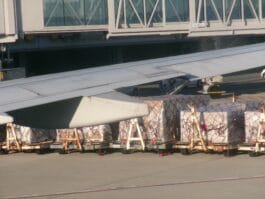
In reality, few airports have full operational control beyond their own perimeter – especially during disruptions. Liege attempts to mitigate this with escalation alerts, express lanes, and direct warehouse-to-apron transfers that reduce exposure time.
During peak periods, dedicated pharma teams are deployed to prioritise sensitive shipments. “Real-time milestone tracking and automated escalation alerts ensure issues are addressed instantly, maintaining high service reliability even under pressure,” said Brun.
Digital twins and downtime planning
What sets Liege apart may be its appetite for simulation. The airport has developed a Digital Twin that models disruption scenarios – from extreme weather to equipment failure – in an attempt to pre-empt breakdowns in the chain.
“Our contingency framework, backup refrigeration systems, risk-escalation protocols and rapid-response teams ensure immediate corrective action,” Brun said. “Even during global crises, LGG remains fully operational and responsive to pharma industry demands.”
Still, no simulation accounts for real-world variability in airline performance or inconsistent handovers from third parties — persistent pain points across pharma logistics. Liege’s approach leans on digital tools and physical design to offset those risks, but standardisation across actors remains a challenge industry-wide.
Customs is often another friction point, but Liege has pushed for streamlining. “We ensure strict biosecurity and product integrity during customs clearance through fast, fully digital customs processes supported by LGG Tracking,” said Torsten Wefers, Vice President Sales & Marketing. Sensitive shipments are routed via direct apron access to minimise tarmac time during inspection.
Expansion plans target next-gen healthcare logistics
Pharmaceutical cargo is now central to Liege’s long-term strategy. The airport is investing €500 million through its CargoLand programme, which includes 38,000 m² of new warehouse capacity — part of it reserved for pharma and perishables.
“Enhanced digital systems, including our Digital Twin, AI-supported planning and multimodal integration, will strengthen our ability to meet the rising global demand for healthcare products,” said Brun.
Innovation is also built into the development roadmap. Liege is working with temperature-control technology providers like NSI and running over 30 digitalisation projects. “We continuously test and adopt new technologies, including AI-driven monitoring and advanced IoT-enabled solutions,” Brun added.
Pilot programmes around passive and active packaging are underway, and testing infrastructure is being developed to support validation. “Our commitment to experimentation and co-development ensures that LGG remains a pioneer in sensitive-cargo management,” said Brun.
The post Liege Airport expands pharma logistics with €500m investment appeared first on Air Cargo Week.
Go to Source
Author: Anastasiya Simsek
Latest Posts